
21 Easy DIY Nail Polish Remover Solutions for Nails
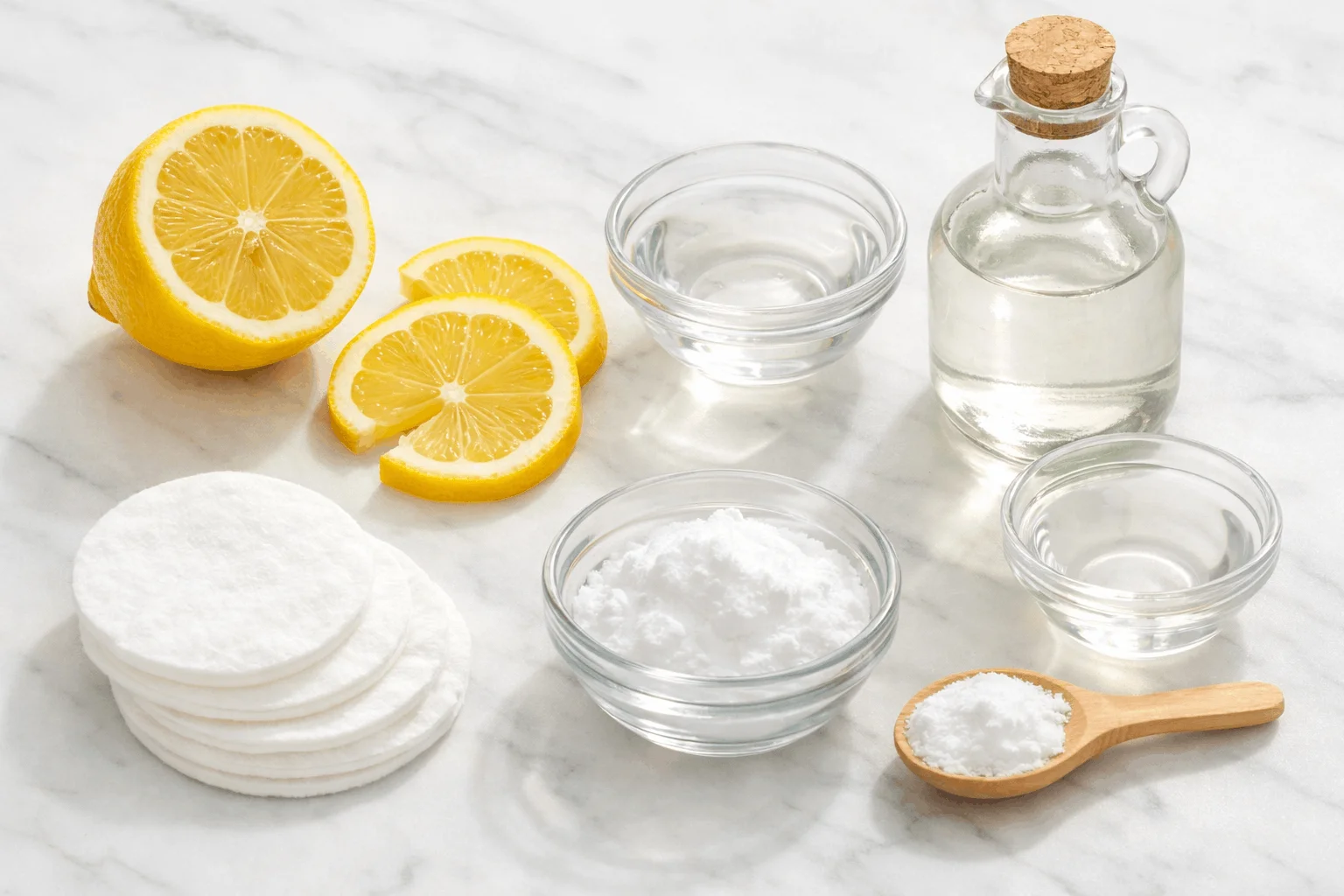
Removing nail polish is a simple beauty task, yet many people don’t realize that store-bought removers often contain harsh chemicals like acetone that can dry out nails and irritate the skin. If you’re looking for gentler alternatives, learning how to make a diy nail polish remover can be a great solution.
Many household ingredients can help loosen or dissolve nail polish while keeping your nails healthier. Whether you prefer natural ingredients, chemical-free beauty routines, or simply ran out of remover at home, these natural nail polish remover diy ideas can save the day.
In this guide, you’ll discover 21 easy solutions that work as a diy acetone free nail polish remover, plus tips to protect and nourish your nails while removing polish.
Why Try a DIY Nail Polish Remover?
Before exploring the solutions, it’s helpful to understand why so many people are switching to homemade alternatives.
1. Gentler on Nails
Traditional acetone removers can strip away natural oils from your nails and cuticles. A diy acetone free nail polish remover often uses milder ingredients that reduce dryness.
2. Budget Friendly
Most diy nail polish remover options use items already available at home like lemon, vinegar, toothpaste, or perfume.
3. Natural Ingredients
If you prefer natural beauty routines, a natural nail polish remover diy can help you avoid strong chemical formulas.
4. Emergency Solutions
Sometimes you simply run out of nail polish remover. These DIY tricks can help you remove polish quickly using household items.
21 Easy DIY Nail Polish Remover Solutions
Below are 21 practical methods you can try at home. Some work better on light polish while others are strong enough for darker colors.
1. Lemon Juice and Vinegar Method
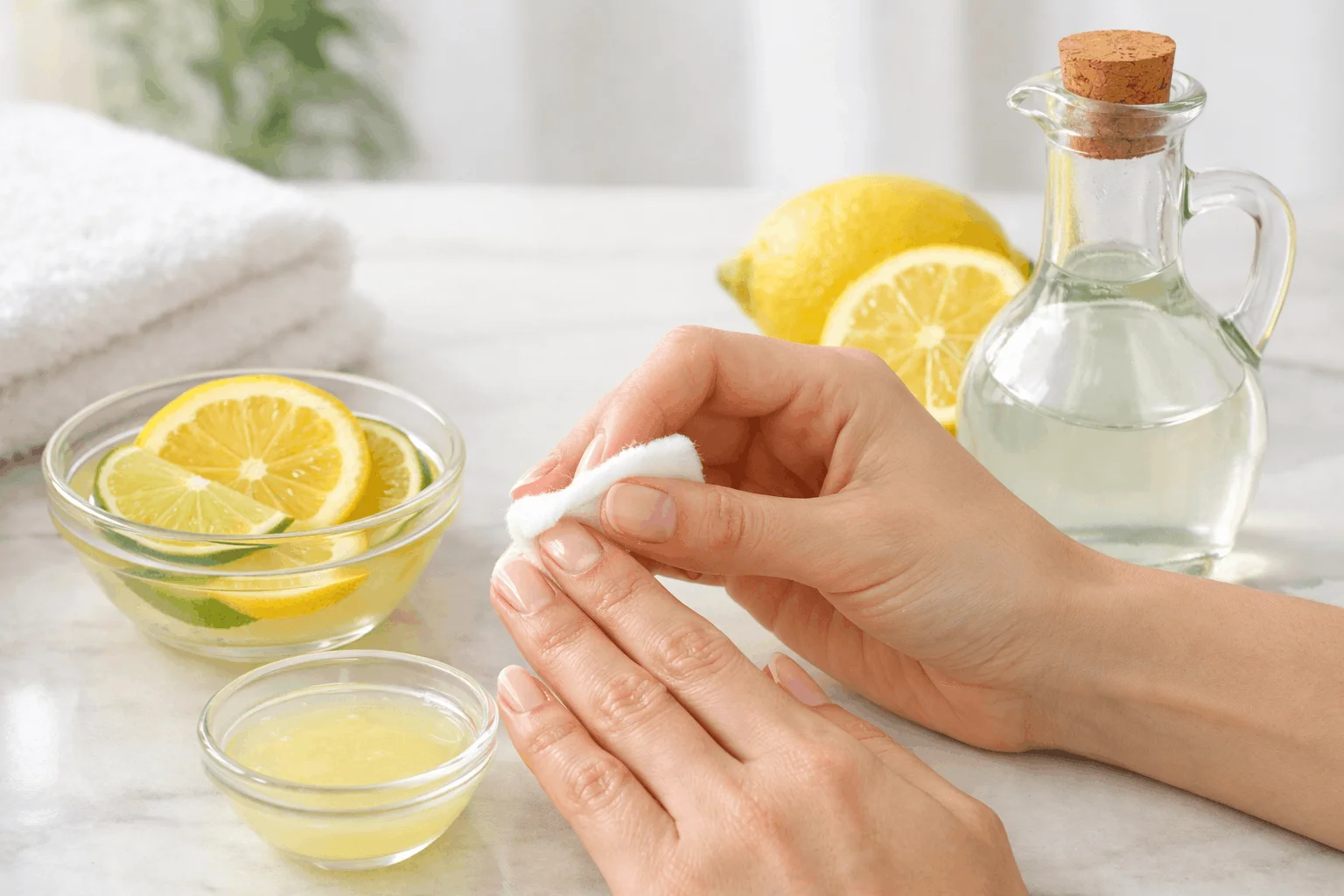
This is one of the most popular natural nail polish remover diy methods.
How to use it:
- Mix equal parts lemon juice and white vinegar.
- Soak your nails in warm water for 5 minutes.
- Dip a cotton ball into the mixture.
- Rub it gently over the nail polish.
The acidity helps break down the polish while keeping nails healthier than harsh removers.
2. Rubbing Alcohol
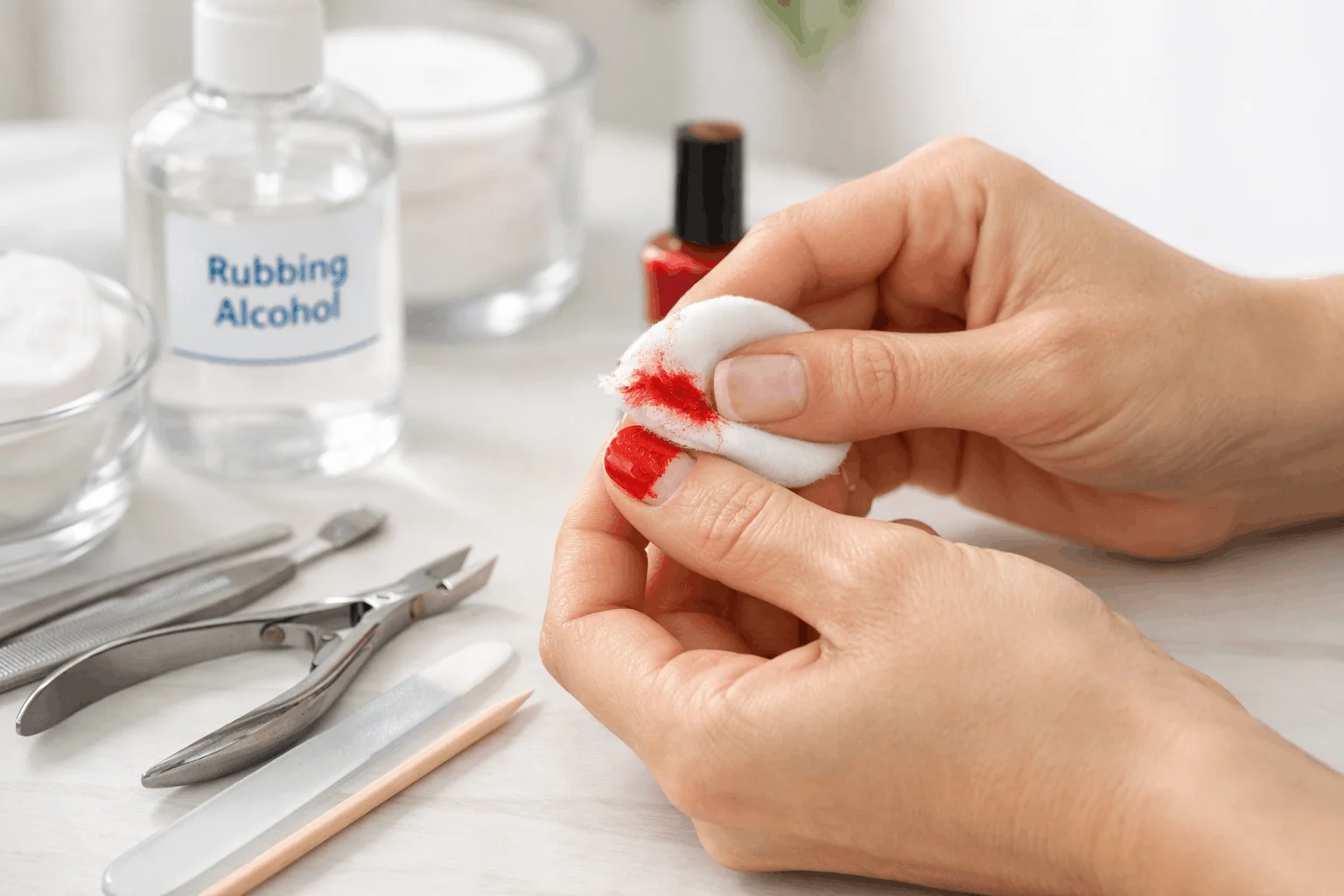
Rubbing alcohol works as an effective diy nail polish remover because it dissolves many types of nail polish formulas.
Steps:
- Soak a cotton pad in rubbing alcohol.
- Press it on the nail for 10 seconds.
- Rub gently until the polish fades.
This method works especially well for regular nail polish.
3. Hand Sanitizer Trick
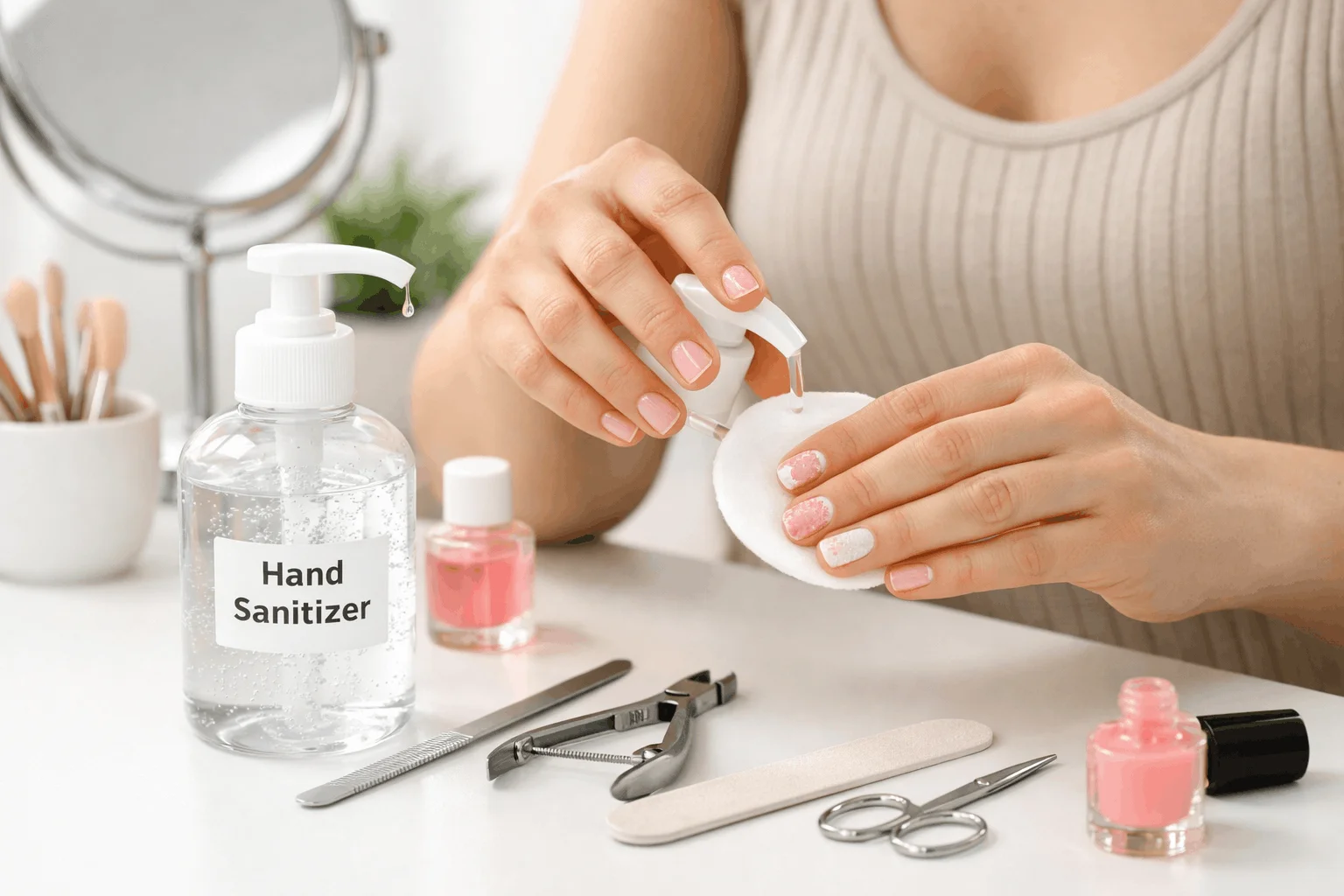
If you’re in a hurry, hand sanitizer can act as a quick diy acetone free nail polish remover.
- Apply sanitizer on a cotton ball.
- Press it on the nail.
- Rub repeatedly until the polish begins to dissolve.
Because sanitizer contains alcohol, it helps break down nail polish.
4. Perfume or Body Spray
Many perfumes contain alcohol, which can help remove polish.
How to use:
- Spray perfume onto a cotton pad.
- Rub it over the nail polish.
- Repeat until the polish disappears.
While not the strongest solution, it can work surprisingly well.
5. Hydrogen Peroxide and Hot Water
This combination acts as a mild natural nail polish remover diy.
Steps:
- Mix two parts hydrogen peroxide with one part hot water.
- Soak nails for 10 minutes.
- Gently rub the polish with a cotton pad.
6. Toothpaste Method
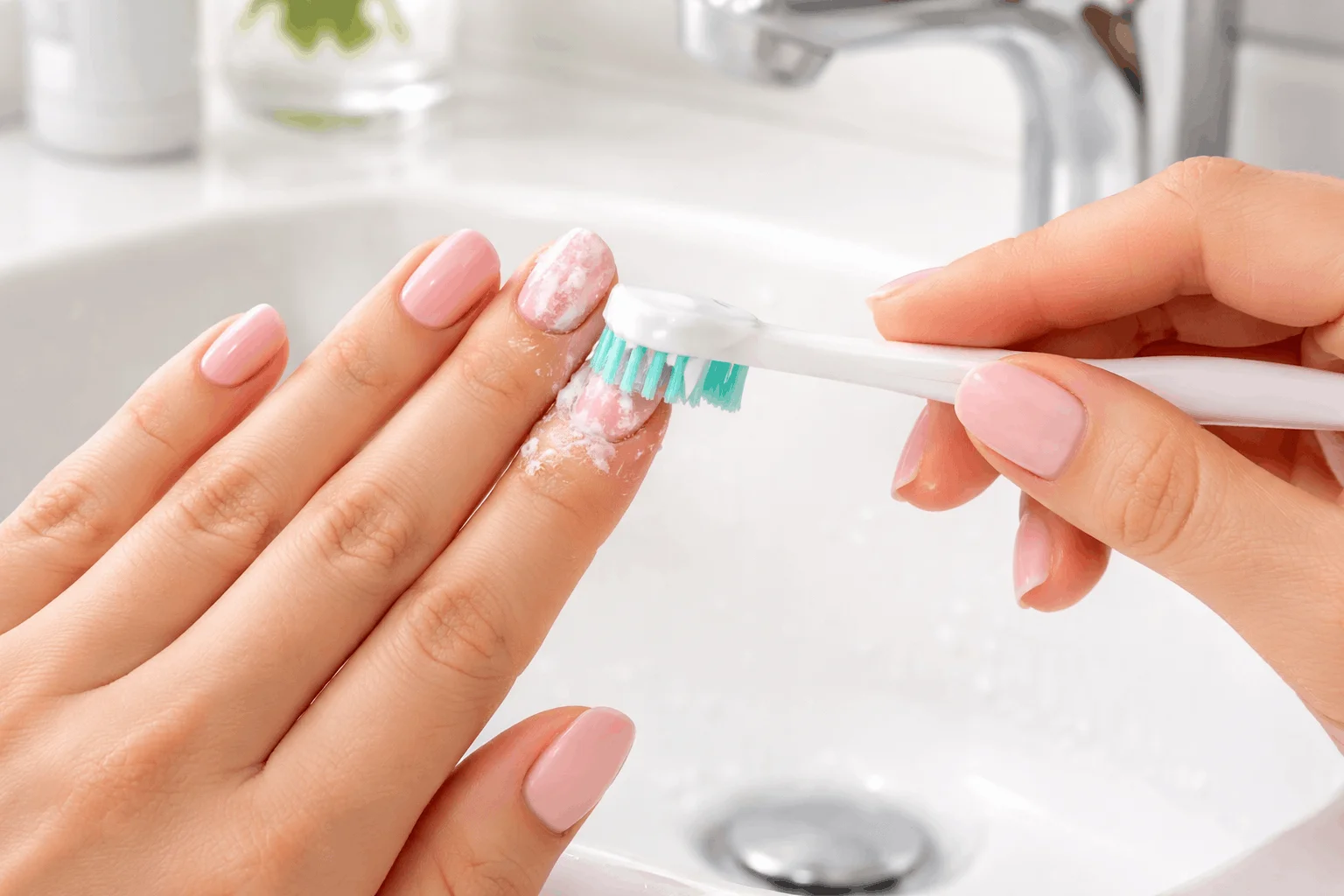
Toothpaste contains mild abrasives that help lift nail polish.
Instructions:
- Apply a small amount of toothpaste on your nails.
- Use an old toothbrush to scrub gently.
- Rinse with warm water.
White toothpaste works best for this diy nail polish remover method.
7. Baking Soda and Lemon Juice
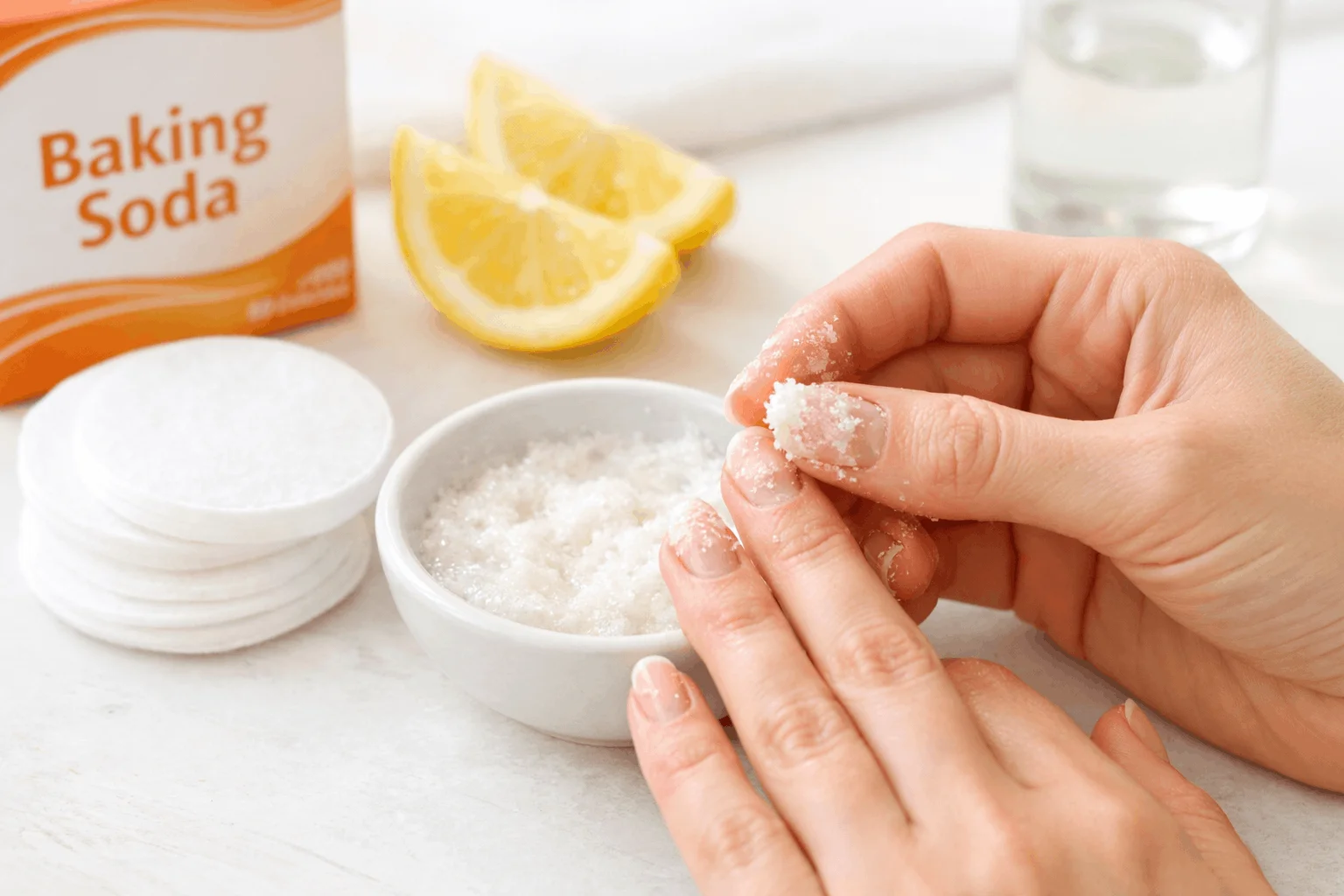
This mixture helps remove stubborn polish.
Steps:
- Mix baking soda and lemon juice into a paste.
- Apply it to the nails.
- Rub gently using cotton.
This method also helps brighten your nails.
8. Vinegar and Orange Juice
Another natural nail polish remover diy solution involves citrus.
How to use:
- Mix vinegar with orange juice.
- Dip cotton in the mixture.
- Rub your nails until polish loosens.
9. Alcohol-Based Mouthwash
Many mouthwashes contain alcohol, making them useful for polish removal.
- Soak cotton in mouthwash.
- Press on the nail.
- Rub repeatedly.
This is a quick diy acetone free nail polish remover option.
10. Hair Spray Method
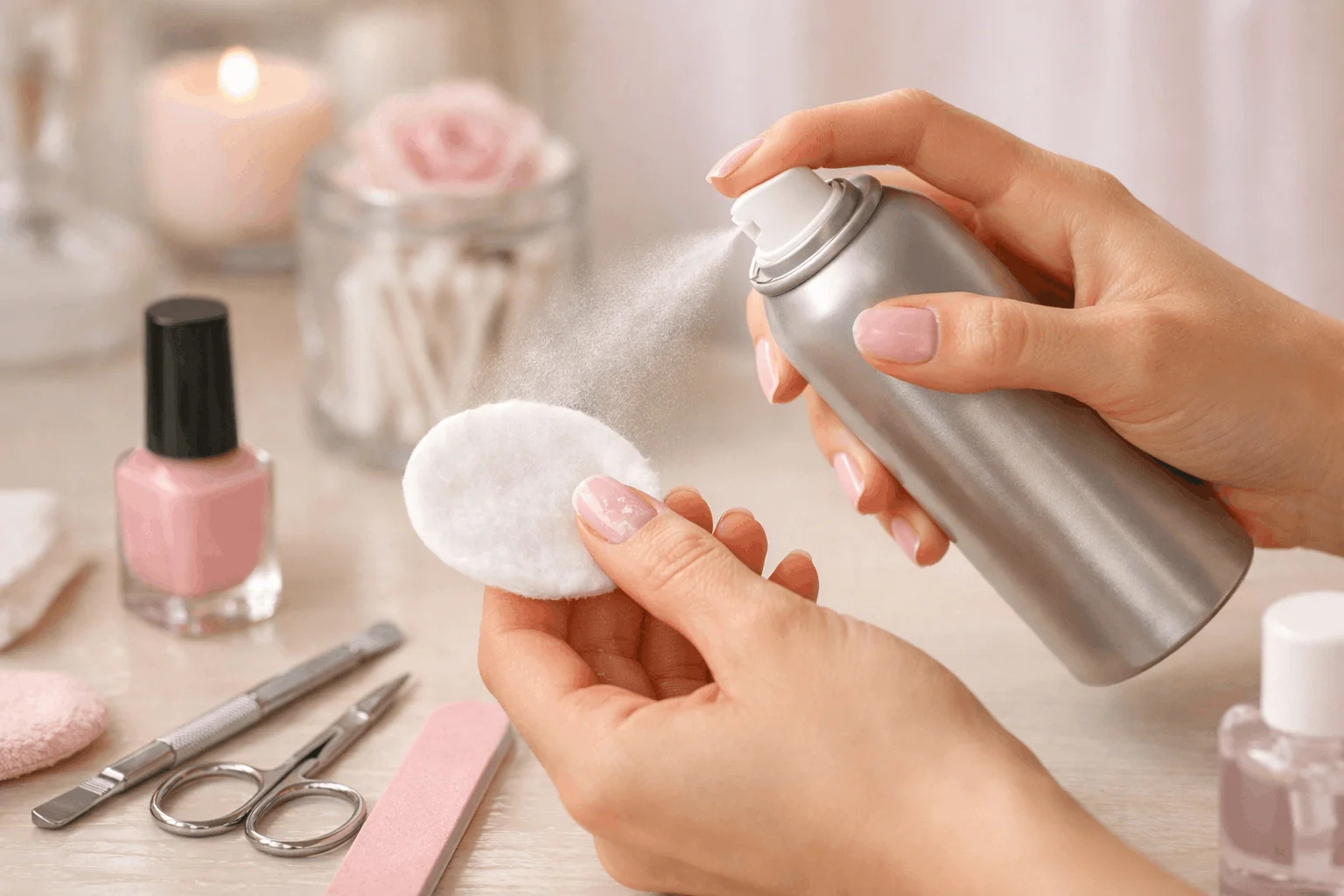
Hair spray contains alcohol and solvents that help dissolve nail polish.
Steps:
- Spray directly on a cotton pad.
- Press it against your nail.
- Rub gently.
Be quick because the spray dries fast.
11. Deodorant Spray
Some aerosol deodorants can act as a diy nail polish remover in emergencies.
- Spray on cotton.
- Rub on nails.
- Repeat if needed.
12. Nail Polish Layer Trick
Interestingly, applying a fresh coat of nail polish can help remove old polish.
How it works:
- Apply a thin layer of new polish.
- Immediately wipe it off with cotton.
The solvents in the fresh polish dissolve the old one.
13. Lemon and Warm Water Soak
A gentle natural nail polish remover diy method for light polish.
- Soak nails in warm lemon water.
- Wait 10 minutes.
- Rub with cotton or a nail buffer.
14. Nail Buffer Method
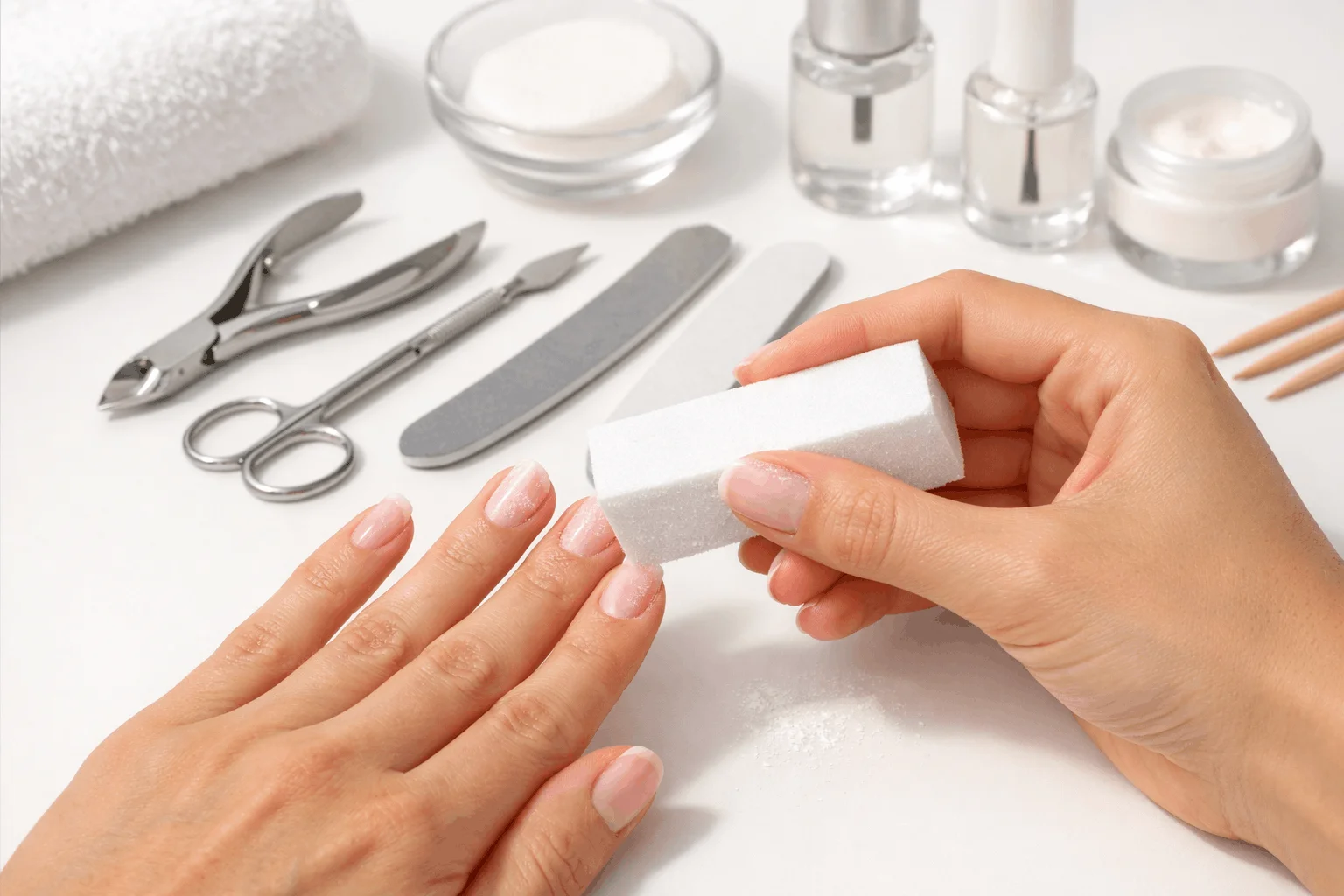
This method physically removes polish.
Steps:
- Use a soft nail buffer.
- Gently buff the polish away.
- Wash and moisturize afterward.
This works best for thin polish layers.
15. Baby Oil and Vinegar
This combination softens polish and hydrates nails.
- Mix baby oil with vinegar.
- Apply to nails.
- Rub with cotton.
16. Alcohol Wipes
Alcohol wipes used for cleaning can act as a quick diy acetone free nail polish remover.
Just rub the wipe over your nails until polish fades.
17. Cola Soak
Some people use cola because its mild acidity helps loosen polish.
- Soak nails in cola for 10 minutes.
- Rub gently.
While unusual, it can work for lighter polish.
18. Nail Polish Remover Pads DIY
You can create reusable pads.
How to make:
- Mix vinegar and lemon juice.
- Soak cotton pads in the mixture.
- Store them in a jar.
These pads act as a diy nail polish remover anytime you need it.
19. Coconut Oil and Lemon
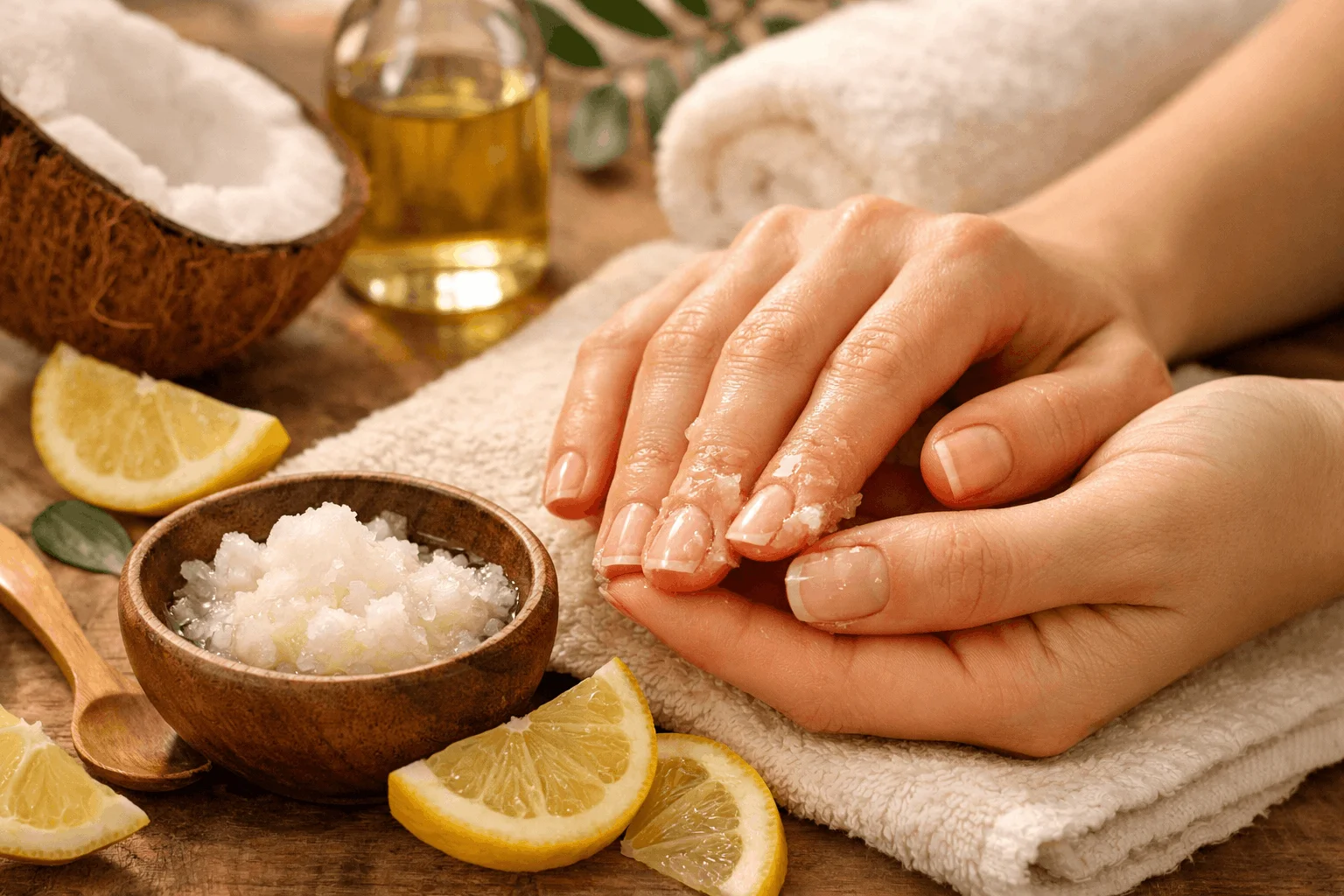
This natural method also nourishes the nails.
- Mix coconut oil and lemon juice.
- Rub on nails using cotton.
- Gently massage.
20. Steam and Cotton Method
Heat helps loosen polish.
- Soak nails in warm water.
- Wrap them in warm cotton soaked in vinegar.
- Rub after a few minutes.
21. Soap and Warm Water Scrub
This is the mildest natural nail polish remover diy technique.
- Soak nails in warm soapy water.
- Scrub with a nail brush.
- Repeat several times.
It works best for thin or chipped polish.
Tips for Healthy Nails After Removing Polish
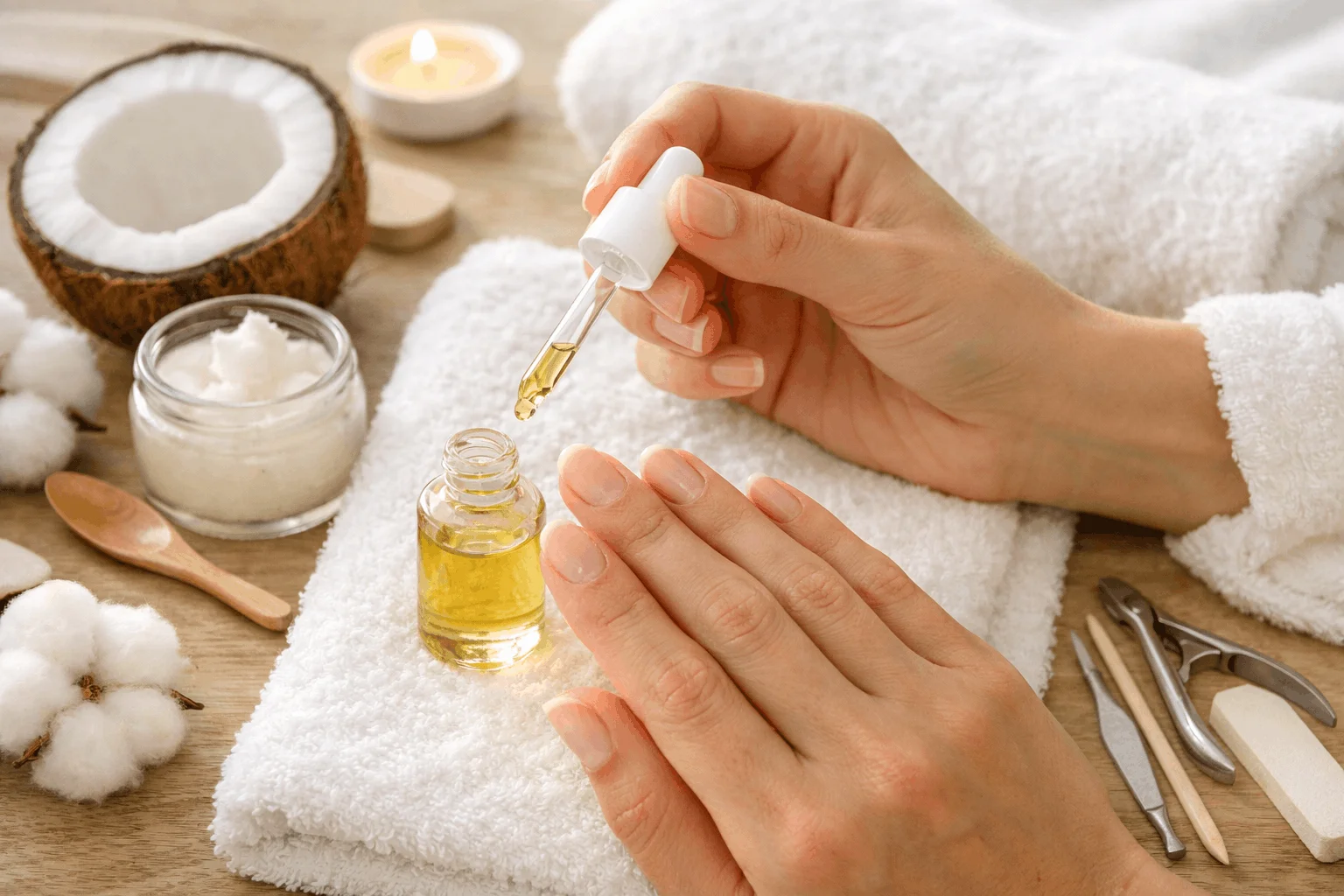
Even when using a diy acetone free nail polish remover, it’s important to take care of your nails afterward.
Moisturize Your Cuticles
Use oils like:
- Coconut oil
- Olive oil
- Vitamin E oil
Avoid Over-Scrubbing
Too much rubbing can weaken nails.
Use a Nail Strengthener
After removing polish, apply a strengthening base coat.
Take Polish Breaks
Let your nails breathe between manicures.
Benefits of Using Natural Nail Polish Removers
Switching to a natural nail polish remover diy routine offers several benefits.
Healthier Nails
Natural ingredients are less drying.
Reduced Chemical Exposure
You avoid strong solvents commonly found in commercial removers.
Eco-Friendly
Homemade solutions often use biodegradable ingredients.
Convenient
Many DIY methods use items already available at home.
When DIY Methods May Not Work
While many diy nail polish remover methods work well, they may struggle with:
- Gel nail polish
- Dip powder nails
- Glitter polish
These stronger formulas usually require professional removers.
Final Thoughts
Using a diy nail polish remover can be a convenient, budget-friendly, and gentle alternative to traditional removers. From simple mixtures like lemon and vinegar to creative tricks like toothpaste or perfume, there are plenty of ways to remove polish using everyday household items.
If you prefer natural beauty solutions, many of these methods also function as a natural nail polish remover diy, helping you avoid harsh chemicals while maintaining healthy nails.
And when you want a gentler approach, a diy acetone free nail polish remover can keep your nails moisturized and strong. With the 21 solutions shared above, you’ll always have a backup plan for removing nail polish at home.
FAQs
1. What is the best DIY nail polish remover?
A mixture of lemon juice and vinegar is one of the most effective diy nail polish remover options because the acidity helps dissolve polish.
2. Can I remove nail polish without acetone?
Yes. Many methods like rubbing alcohol, hand sanitizer, toothpaste, or vinegar mixtures can work as a diy acetone free nail polish remover.
3. Are natural nail polish remover DIY methods safe?
Most natural nail polish remover diy solutions use mild ingredients like citrus, vinegar, or oils, making them safer for regular use.
4. Do DIY nail polish removers work on gel polish?
Usually no. Gel polish is stronger and typically requires acetone or professional removal techniques.
5. How can I keep my nails healthy after removing polish?
Moisturize with oils, avoid over-scrubbing, and use a strengthening base coat to protect your nails.


